
Plugs and voltage in Israel: check before you order electronics
A two-minute check before you buy anything with a plug: Israel’s voltage, which plug variant to order, and why a good USB-C charger solves most of it.
The short answer: Israel’s mains power is 230V at 50Hz, the same as most of Europe. Before you order anything with a plug, check two things on the listing: the input voltage (look for “100–240V”) and the plug type you choose on the product page.
We last checked these facts on October 18, 2026.
What voltage does Israel use?
230V at 50Hz. According to the Electricity Authority’s glossary (in Hebrew, checked October 18, 2026), a home connection in Israel runs at 230V per phase, and the grid in Israel and Europe runs at 50Hz. The US grid runs at 60Hz, and many appliances made for the US are built for 110–120V.
That difference is what matters for anything you order from a US-focused listing. A device built only for US power can be damaged on Israeli power, even with a plug adapter.
Will my device work in Israel?
Look at the label or the listing’s specs for the input line. It usually looks like this:
- “Input: 100–240V ~ 50/60Hz” works anywhere, Israel included. You only need the right plug.
- “Input: 220–240V ~ 50Hz” is made for Israel and Europe.
- “Input: 110–120V ~ 60Hz” is US-only. Don’t plug it in here without a voltage converter, and for most things, don’t buy it.
Phone and laptop chargers, power banks and most small electronics are rated 100–240V. Appliances that heat or have a motor often aren’t, so check those first (more on them below).
If the listing doesn’t state the input voltage at all, ask the seller or skip it.
Which plug fits an Israeli socket?
Israeli plugs and sockets are built to Israeli standard SI 32, which the Customs (Personal Import) Order, 2019 names as the standard for plugs and sockets. The Standards Institution of Israel’s page for SI 32 part 1.1 (in Hebrew, checked October 22, 2026) says it covers household plugs and sockets up to 250V and 16A, with or without an earth pin.
Two plug shapes fit Israeli home sockets:
- The three-pin Israeli plug (Type H).
- The thin two-pin European plug (Type C). This is the plug to look for when a charger comes in an “EU” version.
Todd Edelman, who writes these guides, checked his own home: “In my house, every socket takes the three-pin Israeli plug and the thin two-pin European one.” That’s first-hand experience, not a government rule. We haven’t found a government, Standards Institution or Israel Electric Corporation page that lists which foreign plug shapes fit, and the SI 32 text itself is sold rather than published free.
Some plugs sold as “EU” are a thicker, round type used in Germany and much of Europe. We don’t say whether those fit, because we have no source for it; if a variant photo shows one, choose a different variant or ask the seller.
Choosing the plug on the product page
On AliExpress, chargers and other mains products usually come in several plug variants, picked from a menu on the product page next to color or size. Labels vary by seller: “EU”, “US”, “UK”, sometimes “AU”. Israel rarely has its own option.
- Choose “EU” for chargers, and check that variant’s photo shows the thin two-pin plug.
- Don’t choose “US” or “UK” for anything you’ll plug into a wall here. You’d need an adapter for every use.
- Check the photo, not just the label. The plug in the variant photo is the one you’ll get.
The same applies to other stores: the plug variant is part of what you’re buying, so pick it before you add to cart.
Adapter or converter: what’s the difference?
- A plug adapter changes the shape of the plug. It does nothing to the power. Fine for a 100–240V device with the wrong plug.
- A voltage converter (or transformer) changes the voltage. Only needed for a device that can’t take 230V, and big, heavy ones are needed for anything that heats.
For a 100–240V device, the cleanest answer is the right plug from the start, or a charger that fits Israeli sockets, rather than an adapter that stays plugged in for years.
Why a good USB-C charger solves most of it
Most of what you plug in every day charges over USB. A branded USB-C charger with the right plug takes Israeli power directly and charges phones, tablets, earbuds and many laptops. Buy one good charger, choose the EU plug, and the plug on each device stops mattering.
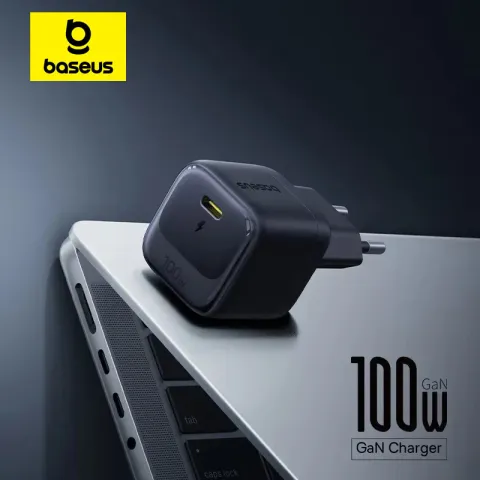
GaN (gallium nitride) chargers are the small, high-power kind. These are our picks. Every option on the Baseus listing comes with an EU plug (checked October 22, 2026):
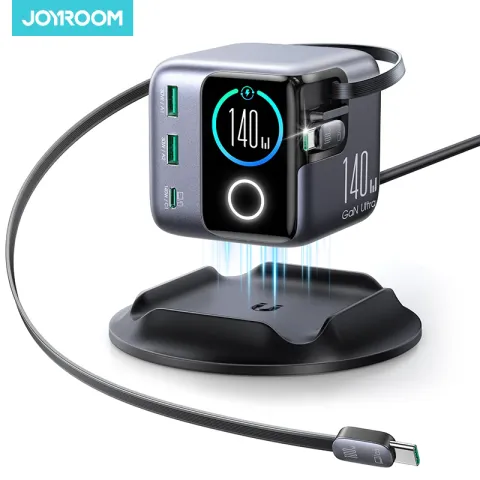
The Joyroom desk charger has five ports and charges five devices at once, laptops included on its USB-C ports, according to Joyroom’s product page (published February 3, 2026; checked October 18, 2026). Its listing offers EU, US and UK plugs and opens on the US one, so switch to EU before you add it to your cart (checked October 22, 2026). It’s over the import-VAT threshold, so expect VAT on top of the price shown.
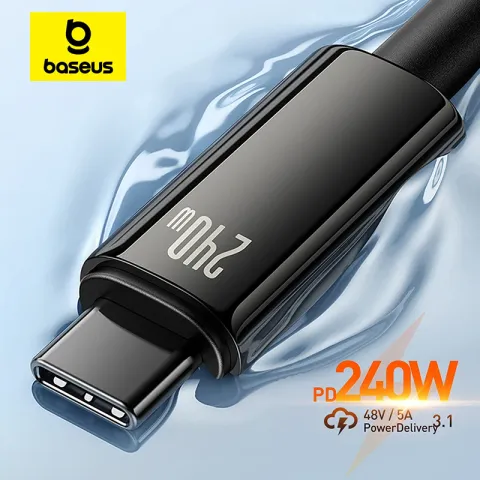
A high-power charger needs a cable rated for it. A cable rated for 240W has room to spare for both chargers above:
For more choices, see the best chargers and power banks to order to Israel.
What we never list, and why
We don’t list no-name mains adapters, travel adapters or plug converters. Anything that sits between a wall socket and your device has to be well made, and on a no-name listing there’s no way to check.
Israel is strict about them too. Plugs and sockets are on the list of goods that need a standards approval under SI 32 even when you import them for yourself (Customs (Personal Import) Order, 2019, second schedule). The Ministry of Economy lets you ask for an exemption online, case by case (Director General instruction 2.12, in Hebrew, updated January 30, 2025). If you need an adapter, it’s simpler to buy one in Israel.
Hair dryers, kitchen gear and anything that heats
Appliances that heat or have a strong motor (hair dryers, straighteners, kettles, blenders, coffee machines) are where voltage goes wrong. A US-only model can burn out on 230V, and a converter big enough to run it is bulky and expensive.
- Buy the 220–240V version, made for Europe or Israel, and check its plug.
- If a listing only shows a US plug, assume it’s a US-voltage model until the specs say otherwise.
- For big appliances, compare with buying locally: you get Israel’s plug and a local warranty.
Plug it in safely
The Fire and Rescue Authority’s guidance on electrical appliances (in Hebrew, published October 12, 2020) is worth following with any new device: don’t run many appliances from one socket, stop using a cord that is damaged or gets hot, and have repairs done by a licensed electrician.
Checklist before you order
- Find the input voltage: “100–240V” or “220–240V” works here.
- Pick the EU plug variant, and check its photo shows the thin two-pin plug: the default option may be a US plug.
- Skip US-only (110–120V) appliances, especially anything that heats.
- Charge everything you can from one good USB-C charger.
- Buy plug adapters locally, not from a no-name listing.
Questions people ask
What plug type does Israel use?
Israeli plugs and sockets follow Israeli standard SI 32. The three-pin Israeli plug (Type H) and the thin two-pin European plug (Type C) both fit Israeli home sockets, from Todd Edelman’s own home. We haven’t found a government list of which foreign plugs fit.
Is Israel’s voltage the same as Europe’s?
Yes. Israel runs at 230V and 50Hz, like most of Europe, according to the Electricity Authority. The US grid runs at 60Hz, and US-only appliances are usually built for 110–120V, so they can be damaged here even with a plug adapter. Devices labeled 100–240V work in both.
Do I need a voltage converter in Israel?
Only for a device that can’t take 230V, such as a US-only hair dryer or kitchen appliance. Phone and laptop chargers, and most small electronics, are rated 100–240V and need only the right plug. For heating appliances, buying the 220–240V version is easier than using a converter.
Which plug should I choose when ordering online for Israel?
Usually “EU”, when the variant photo shows the thin two-pin plug. Check it, because the option a listing opens on may be a US plug. Avoid “US” and “UK” for anything you’ll plug into the wall, and confirm the input voltage says 100–240V or 220–240V.
Sources
We checked every source below on October 18, 2026.
- Electricity Authority, glossary of electricity terms (in Hebrew). Checked October 18, 2026.
- Customs (Personal Import) Order, 2019, second schedule, via Nevo.
- Ministry of Economy and Industry, Director General instruction 2.12 on standards exemptions for personal import, with appendix B (in Hebrew). Published September 8, 2019; updated January 30, 2025.
- Fire and Rescue Authority, safety rules for electrical appliances (in Hebrew). Published October 12, 2020.
- Joyroom, JR-TRD01 PODIX 140W desktop charger, the maker’s product page (ports, input voltage, plug versions). Published February 3, 2026.
- Standards Institution of Israel, SI 32 part 1.1 (in Hebrew; scope and status). Published September 17, 2017, with amendments. Checked October 22, 2026.