

Israel’s import tax on online orders, explained
Every rule an English speaker needs before ordering from abroad, in plain words, checked against the Tax Authority’s own pages.
The short answer: if the goods in your package cost $75 or less, you pay no import tax. Above that, you pay 18% VAT, plus purchase tax on some kinds of goods; customs duty starts only above $500. Shipping charged separately doesn’t count toward the limit.
This is a shopper’s summary, not tax or legal advice. Rules change; we last checked them on October 18, 2026.
The rules at a glance
| What the goods cost (in dollars) |
VAT | Purchase tax | Customs duty |
|---|---|---|---|
| Up to $75 | None | None | None |
| Over $75, up to $500 | 18% | Only on some goods | None |
| Over $500 | 18% | Only on some goods | Depends on the product |
The limits apply to the value of the goods, per package, at the dollar rate on the day the package lands. Tobacco, alcohol and e-cigarettes are taxed at any value. Source: the Israel Tax Authority’s guide to personal importation, chapters 4 to 7.
How much can I order without paying import tax?
Up to $75 per package, not counting shipping that’s charged separately. Under that line, the Tax Authority treats your package as exempt from VAT, customs duty and purchase tax (chapter 4).
The exemption is for personal use: goods for yourself or your household, in a reasonable quantity, not for resale (Personal Import Order, 2019).
Example: an order under the line. You buy a charger for $60 with free shipping. It’s under $75, so nothing is added when it arrives.
Example: an order just over it. You buy headphones for $85 with free shipping. The whole value is taxed, not just the part above the line, so expect about $15.30 in VAT (18% of $85), plus purchase tax if the item carries it.
What’s taxed: VAT, customs duty and purchase tax
Three different taxes can apply to a package, and they start at different points.
- VAT is Israel’s sales tax, 18% on most goods since January 1, 2025 (Tax Authority directive 01/2025, in Hebrew). On imports it applies above $75.
- Purchase tax is an extra tax on certain kinds of goods, such as some entertainment electronics and car spare parts. It also starts above $75 (chapter 5).
- Customs duty is a tax on the import itself. For personal packages it starts only above $500, and the rate depends on the product (chapter 6). Over $1,000, a package is cleared like a commercial import (chapter 7).
For most small orders, VAT is the only one you’ll meet. The Tax Authority’s personal import calculator (in Hebrew) shows which taxes apply to a specific product.
Does shipping count toward the threshold?
No, as long as the shipping is charged separately. The test looks at the value of the goods alone (chapter 4).
Once the goods are over the line, it changes: tax is calculated on the goods plus shipping and insurance (chapter 5).
Example: shipping charged separately. The goods cost $70 and shipping is another $15. The total is over $75, but the goods aren’t, so no tax is due.
Example: over the line, with shipping. The goods cost $85 and shipping is another $10. The goods are over $75, so VAT is charged on both: about $17.10 on $95.
If shipping is built into the item’s price, there’s nothing to separate, and the whole price is the value of the goods.
What if I place two orders close together?
Packages from the same supplier to the same person within 72 hours count as one shipment, and customs adds their values together (chapter 4; Personal Import Order, 2019, section 3).
Example: two orders from one seller. On Sunday you order a phone case for $40. On Monday, from the same seller, you order a power bank for $55. Each is under $75, but together they come to $95, so expect about $17.10 in VAT.
Orders from different suppliers, or from the same supplier more than 72 hours apart, are counted separately.
Do coupons and discounts lower the value?
Some do and some don’t. Customs values your package at the price actually paid to the seller, and the Tax Authority lists discounts it won’t recognize. For those, it uses the price before the discount (chapter 3).
- Doesn’t lower the value: points collected on earlier purchases, vouchers, and credit given to make up for a problem with an earlier order.
- Normally lowers it: a discount the seller itself gives on this item, shown on the invoice. That is part of the price you actually paid.
- Not covered by the rules: coupons paid for by the marketplace or a card company rather than the seller. Plan on the price before them.
Example: paying with points. A speaker is listed at $85. You pay $15 of it with points, so your card is charged $70. Customs still values the speaker at $85, which is over $75, so expect about $15.30 in VAT.
The person receiving the package is responsible for the price declared to customs (chapter 2). If the invoice isn’t clear, Israel Post may ask for screenshots of your order, which show every discount line.
Which exchange rate does customs use?
The rate on the day your package arrives in Israel, not the day you paid (chapter 3).
That matters near the line. An order paid in shekels, or priced just under $75, can tip over if the dollar moves between checkout and delivery.
The rate comes from customs’ own table (chapter 3, in Hebrew), which adds 0.5% to the published exchange rate (Tax Authority customs exchange rates). So customs’ dollar rate is a little higher than the one in the news.
Who collects the tax, and how do I pay?
Either the store collects it at checkout, or the carrier collects it before delivery.
At checkout. Some stores add Israeli import charges to your order before it ships. iHerb, for example, collects duties and taxes at checkout for Israel, so nothing more is due on delivery (iHerb shipping information for Israel).
On delivery. For packages by Israel Post, you pay the tax in cash at the branch or by card online beforehand, using the reference number in the notice. For courier and express packages, the courier’s customs broker pays customs and the courier collects from you, usually at the door (chapter 9).
Israel Post sends a text message with the amount and how to pay, and its app shows a payment link next to the package’s status (Israel Post, customs release). Couriers send their own text or email.
Fake payment texts are common. Israel Post’s real messages link only to postil.co.il or israelpost.co.il, and it never asks for personal details by text or email (Israel Post warning on fake messages). When in doubt, open the carrier’s app or website yourself and check the tracking number there.
Fees that aren’t tax
Israel Post and couriers charge a handling fee for clearing a taxable package through customs, on top of the tax itself (chapter 9). These are Israel Post’s fees, including VAT, from its customs brokerage price list (checked October 18, 2026):
| Fee | Amount (₪) |
|---|---|
| Release fee, taxable package worth up to $200 | 29.38 |
| Release fee, $200 to $500 | 70.68 |
| Release fee, over $500 | 176.88 |
| Financing fee | 2% of the taxes, at least 23.60 |
| Storage, from the sixth day | 6.96 a day |
The same list passes on the Tax Authority’s own computer fee: ₪20 for packages worth $100 to $1,000. Couriers set their own fees, so check your courier’s price list.
Items that need a permit
Some products need a government approval even for personal use, whatever their price (chapter 12).
| Products | Approval from |
|---|---|
| Drones, communication products, remote controls | Ministry of Communications |
| Helmets, child car seats, car spare parts | Ministry of Transport (in Hebrew) |
| Electric scooters and electric bikes | Ministry of Transport (in Hebrew) |
| Laser markers and laser distance measurers | Ministry of Economy (in Hebrew) |
| Plants, seeds and pets | Ministry of Agriculture (in Hebrew; pets) |
Plugs and sockets, including plug adapters, are on a separate list: they need a standards approval under Israeli standard SI 32 even when you import them for yourself (Customs (Personal Import) Order, 2019, second schedule; checked October 22, 2026). The Ministry of Economy can grant an exemption on request (Director General instruction 2.12, in Hebrew, updated January 30, 2025). Our plugs and voltage guide explains why it’s simpler to buy an adapter in Israel.
Some approvals can be arranged after the package arrives, while it waits at customs. A license, where one is needed, must exist before the goods arrive. The Tax Authority’s personal import calculator (in Hebrew) shows what applies to a given product.
Most everyday wireless gear is exempt. Low-power Bluetooth devices with a built-in antenna, laptops, tablets, wireless mice and keyboards, e-readers and GPS receivers need no approval. Wi-Fi routers and extenders, phones, smart speakers, and baby, security and doorbell cameras are exempt for personal import, up to five devices of a kind. Source: Wireless Telegraph (Exemption from Licensing) Regulations, 2021, regulations 2 and 3, and the Ministry of Communications’ questions and answers (updated May 25, 2025).
Gifts, used items and new immigrants
Gifts. There’s no separate gift allowance. A gift sent from abroad is treated like any other package: under $75 it arrives with no tax, and above it, tax is charged on the declared value (chapter 8).
Used items. Also taxed on their declared or invoiced value. Customs can reject a value it doesn’t believe and set its own (chapter 8).
New immigrants (olim). Olim have a limited number of tax-exempt shipments. According to Nefesh B’Nefesh’s guide to postal packages (last updated April 2022), an oleh can pay the tax on a package and then claim it back, counting it as one of those shipments; that usually isn’t possible when a courier paid the tax. Check the current rules with Nefesh B’Nefesh or customs before you rely on it.
Think you were charged wrongly? How to appeal
You can dispute the tax on a package (chapter 11).
- Israel Post packages: use the online appeal form, ideally before you pay.
- Courier packages: you pay first, then appeal through the online form.
Keep your order confirmation and invoice. They show what you actually paid, which is what customs should value.
How 972 picks marks every pick
Every pick carries a tax badge. Under $75 means the item on its own should arrive with no import tax. Over $75 means expect 18% VAT, and the pick shows an estimate in shekels.
The badge is decided on the price after the seller’s own code, never after marketplace coupons, coins or card offers, because those may not count for customs. The threshold comes from one setting, so when the law changes, every badge on the site changes with it.
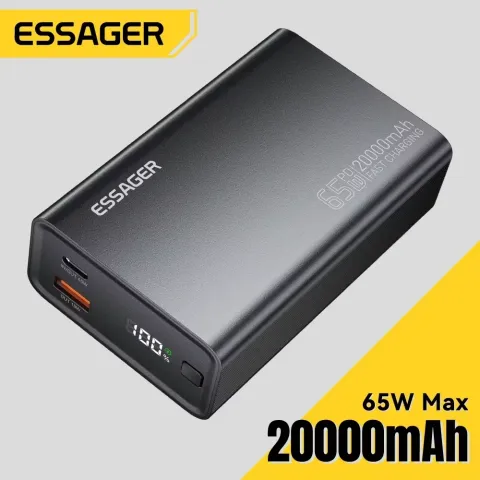 AliExpress
Essager 20000mAh 65W Laptop Power Bank
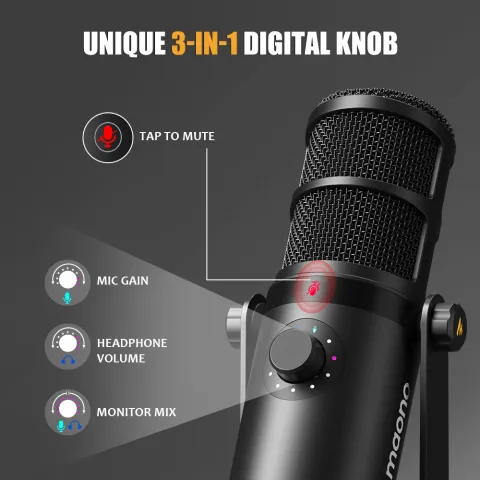
The badge is about one item. Two picks in one order from the same seller can cross the line together.
How the threshold has changed
The threshold has moved several times since late 2025, by government order and Knesset vote. We update this page and every badge when it changes.
| Period | Threshold | What happened |
|---|---|---|
| June 2, 2026 to today | $75 | Back to the earlier level after the Knesset canceled the $130 order on June 1, 2026. Israel Tax Authority, personal import guide, chapter 4 |
| February 25, 2026 to June 1, 2026 | $130 | A new order raised it again the day after the Knesset vote; the Knesset canceled it on June 1, 2026. Customs Tariff Order amendment, Reshumot 2186 (Hebrew) |
| December 24, 2025 to February 24, 2026 | $150 | Raised by order of the Finance Minister; the Knesset canceled the order on February 24, 2026. Customs Tariff Order amendment, Reshumot 2178 (Hebrew) |
| Until December 23, 2025 | $75 | The long-standing level before the changes. Customs Tariff Order amendment, Reshumot 2178 (Hebrew) |
Questions people ask
How much can I import into Israel without paying tax?
Goods worth up to $75 per package, for personal use, arrive with no VAT, purchase tax or customs duty. Shipping charged separately isn’t counted. Tobacco, alcohol and e-cigarettes are taxed at any value. Above $75, VAT applies to the whole value, not just the part over the line.
Do I pay VAT on shipping?
Only when the goods are over $75. Below it, shipping charged separately is left out entirely. Above it, VAT is calculated on the goods plus shipping and insurance, so a separate shipping charge adds to the tax.
Are two orders taxed separately?
Usually, unless they come from the same supplier and arrive within 72 hours of each other. In that case customs combines them into one shipment and taxes the total, even if each order is under $75 on its own.
What happens when my package is over the threshold?
If the store didn’t collect the tax at checkout, the carrier tells you how much is due by text message or email. You pay Israel Post at the branch or online, or pay the courier, before delivery. The carrier’s handling fee is added on top.
Do points and vouchers lower the value of my order?
No. The Tax Authority says points, vouchers and credits for earlier problems don’t reduce the value of a package, so customs uses the price before them. A discount the seller itself gives on the item, shown on the invoice, normally does count.
Do I need a permit for electronics?
Not for most. Bluetooth gear, laptops and tablets are exempt, and Wi-Fi routers, phones and smart speakers are exempt for personal import up to five of a kind. Drones and other communication products need Ministry of Communications approval, and laser measuring tools need Ministry of Economy approval.
Sources
We checked every source below on October 18, 2026.
- Israel Tax Authority, Guide to Personal Importation via Parcel Post or Courier Services, chapters 2 to 7, 9, 11 and 12. Updated July 30, 2026.
- Israel Tax Authority, Information for Israeli residents wishing to import goods in personal import, with the personal import calculator. Published October 22, 2025.
- Customs (Personal Import) Order, 2019, section 3 (the 72-hour rule), via Nevo.
- Israel Post, questions and answers on import taxes.
- iHerb, shipping information for Israel.
- Nefesh B’Nefesh, Importing goods by postal packages.
This is a shopper’s summary, not tax advice. For your specific case, check the Israel Tax Authority calculator or ask a customs broker.